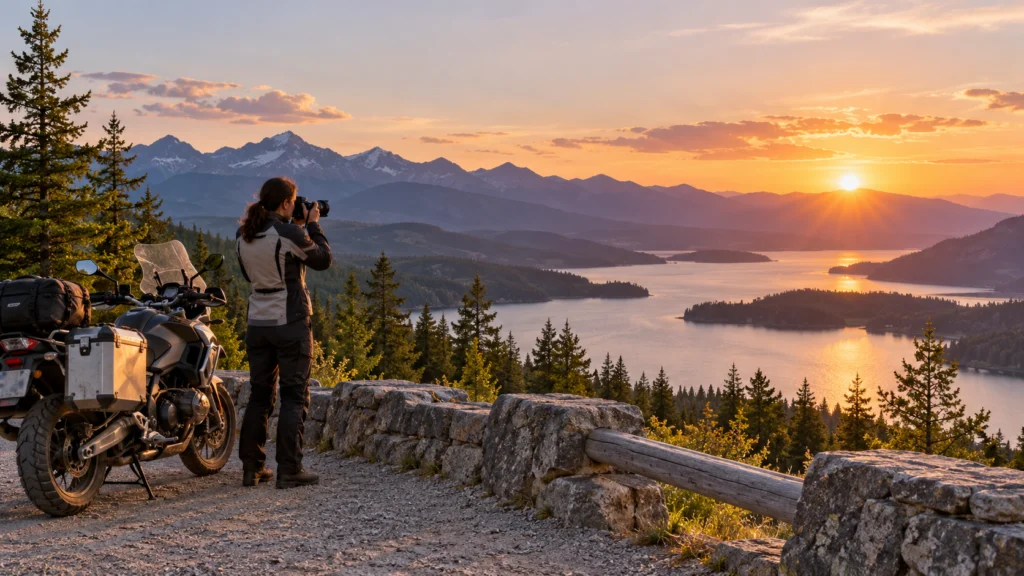
Photographs can preserve a road trip without turning every stop into a production. Choose a few suitable places and leave the rest of the journey unrecorded. A missed image is preferable to a rushed decision on the road or an obstructed stopping place.
Choose stopping places before the shot
Use places where stopping and parking are permitted and practical. Do not stop abruptly for a view or assume a narrow roadside area is suitable. Check signs, property permission and other users.
Handle the camera only after the motorcycle is safely parked and you are in a suitable location. Ontario’s road guidance emphasises keeping attention on driving and avoiding distractions. A photo opportunity does not change that responsibility.
| Question | Check | Decision |
|---|---|---|
| Location | Is stopping permitted and suitable? | Use another place if uncertain |
| Access | Are people and routes kept clear? | Do not occupy an entrance or path |
| Subject | Does a person or property need permission? | Ask rather than assume |
| Time | Does the stop fit the day? | Take fewer images instead of rushing |
Keep people and context accurate
Ask before making an identifiable portrait or photographing a private area. Explain intended sharing where relevant. Avoid captions that invent a local story or imply endorsement by a business.
Do not ask companions to create a risky pose or interrupt an essential task. A good image should not require unsafe positioning, technical performance or pressure to participate.
- Plan a small number of suitable stops.
- Keep camera use out of riding.
- Respect signs, access and permission.
- Leave time to experience the place without recording it.
Edit after the journey
Choose a modest selection later rather than repeatedly checking and posting while the day continues. Review for private information and misleading context before sharing. Keep the location and description honest.
If photographs are making the timetable stressful, reduce them. The purpose is to remember the trip, not complete a compulsory gallery at the expense of rest or responsible travel. Keep a few accurate notes about the place so later captions do not rely on invented details.
For one planned viewpoint, agree that the group parks first, keeps the access route clear and takes only the photographs people want. A rider who prefers to rest can sit out. Before departing, put the camera away and finish adjusting bags while stationary. Treat this as the end of the stop, rather than continuing to review images while preparing to rejoin the route.
Questions and answers
Should I stop whenever a view appears?
No. Use a suitable legal stopping place and avoid abrupt decisions for a photograph.
Can I operate a camera while riding?
Keep attention on riding. Plan camera use only when safely stopped in an appropriate place.
Must every stop produce a photograph?
No. A few considered images can be enough, and an unrecorded moment can still be worthwhile.
Sources: ontario.ca.