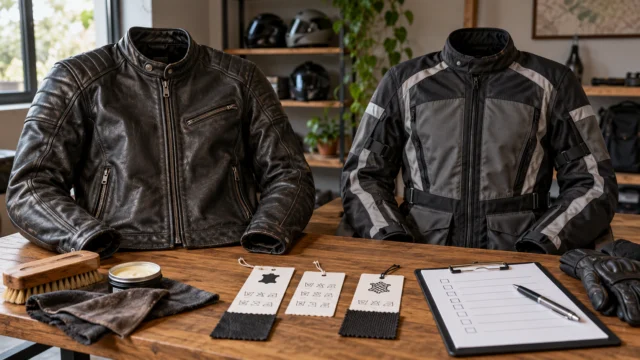
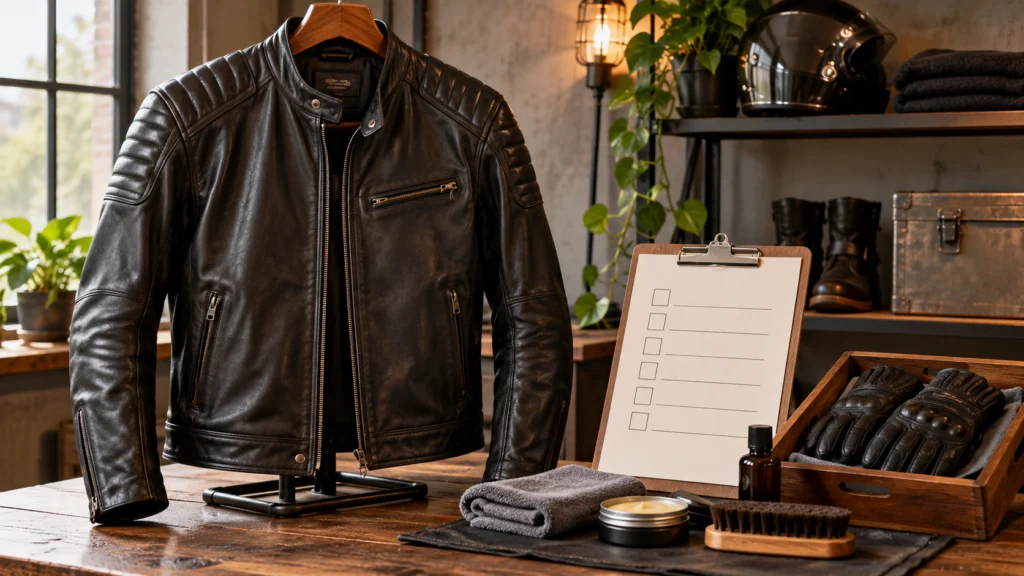
Winter storage is a useful moment to give riding gear a deliberate review. The aim is to put away an identified, clean and suitably dry garment, not hide road dirt or damage until spring. Leather, lining and protective components may need different care.
Read the labels before treating the material
Find the model and care information, including instructions for removable layers and protectors. Manufacturer guidance should control the method. REV’IT!, for example, explicitly gives the garment label priority over its general leather-care article.
Do not assume a conditioner suitable for a household leather item is appropriate for protective riding clothing. Finish, stretch panels and other materials can change the requirements. Ask the manufacturer when the identification or instructions are unclear.
| Part | Check | Next step |
|---|---|---|
| Outer material | Dirt, moisture and visible damage | Use the permitted care method |
| Seams and closures | Wear, damage or poor operation | Seek suitable repair advice |
| Liners and protectors | Separate labels and correct placement | Follow removal and refitting instructions |
| Storage location | Support and suitable conditions | Keep the item accessible for inspection |
Avoid heat and chemical shortcuts
The reviewed manufacturer guidance warns against aggressive solvents and direct heat, and recommends slow drying at room temperature for its leather garments. Use your own item’s instructions rather than applying one brand’s product recipe indiscriminately.
Cleaning does not restore protective performance after damage. If there has been an impact, abrasion or significant deterioration, obtain appropriate manufacturer or specialist advice before treating the garment as ready to ride.
- Identify the garment and its care labels.
- Record concerns before cleaning makes them less visible.
- Dry by the permitted method before enclosing the item.
- Keep a note of repairs or checks needed before spring use.
Store for retrieval as well as appearance
Use suitable support without crushing the garment beneath unrelated items. Keep its product details and maintenance record available. A breathable or enclosed storage choice should follow the maker’s requirements, not a generic wardrobe rule.
Before the next season, check fit and condition again. A clean stored jacket is not automatically a current fit, and storage does not resolve a repair left undecided.
Questions and answers
Can ordinary leather polish be used?
Only if the garment maker permits it. Protective clothing can combine materials and finishes with different care needs.
Does cleaning repair crash damage?
No. Damage needs appropriate assessment; a better appearance does not establish restored protection.
Should damp gear be packed away to save space?
Follow the required drying process first. Do not conceal moisture in storage.
Sources: support.revitsport.com.