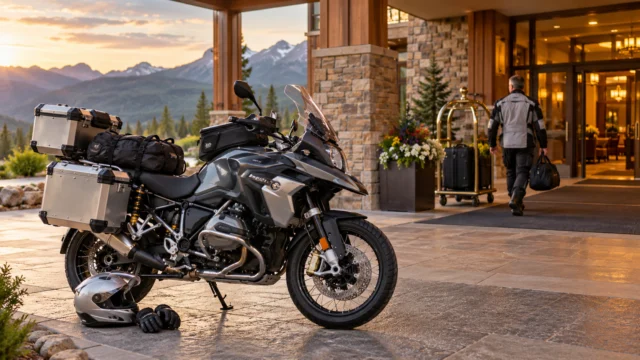
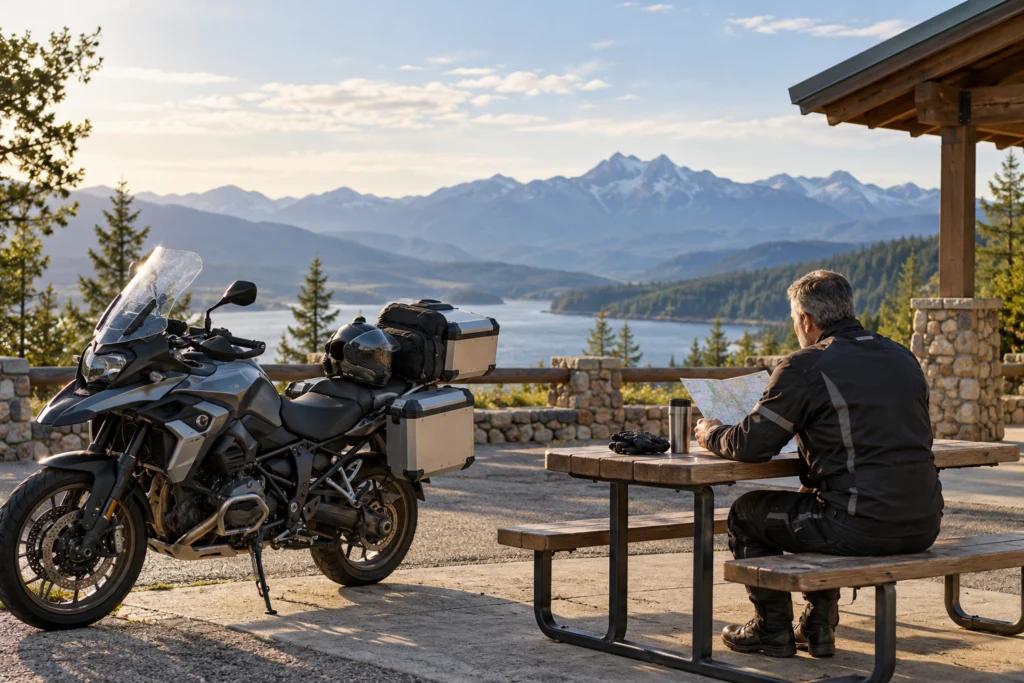
A comfortable day trip is planned around the rider as well as the route. The distance on a map does not include every stop, delay or change in conditions. Choose a manageable destination and leave room to shorten the day without treating that as a failed ride.
Plan the day from departure to return
Include preparation, fuel or charging where relevant, meals and the final journey home. Confirm that intended stops are suitable and currently available. A route should not depend on reaching one place at exactly the optimistic map time.
Check weather and official road information before leaving. Avoid turning a scenic detour into a commitment that cannot be changed when conditions become unsuitable.
| Part | Plan | Alternative |
|---|---|---|
| Main destination | A manageable purpose for the day | A nearer stop |
| Rest points | Suitable places to stop legally | Another known option |
| Weather | Conditions and clothing requirements | Delay, shorten or cancel |
| Return | A realistic finish and rest needs | An earlier journey or other arrangement |
Treat fatigue as a reason to change the plan
Ontario’s driver handbook advises avoiding driving while drowsy and explains that stimulants are not a substitute for sleep. Apply the basic principle of not riding when you are not alert. A break schedule is not permission to continue despite warning signs.
Do not use the group’s pace or a booking deadline as the deciding factor. If you need to stop, choose a safe legal place and make a suitable alternative plan. This article is travel planning, not a riding-skills lesson.
- Choose a route with shorter options.
- Check current road and weather information.
- Plan legal practical stops before departure.
- Keep the return flexible if alertness or conditions change.
Leave space for the reason you went
A pleasant meal, a short walk or a view should not require rushing the riding segments. Reduce the number of stops if the timetable becomes crowded. The trip is not improved by turning every pause into a countdown.
Afterwards, note actual timing and which stops worked. That record supports the next plan more accurately than remembering only the total distance.
Make a short route card with the main stop, a nearer alternative and a place to reassess the return. In a fictional lakeside outing, the cafe visit can be dropped while the nearer rest stop remains the destination. Discuss that option with companions before leaving. Nobody then needs to defend a shorter day against an itinerary that was only an optimistic sketch.
Questions and answers
Can a map’s travel time define the whole day?
No. Include stops, preparation, conditions and the return journey.
Will coffee make a tired ride safe?
Do not rely on stimulants instead of adequate rest. Avoid riding when drowsy and change the plan.
Is shortening the route a failure?
No. A flexible route is part of a considered trip, especially when conditions or alertness change.
Sources: ontario.ca.