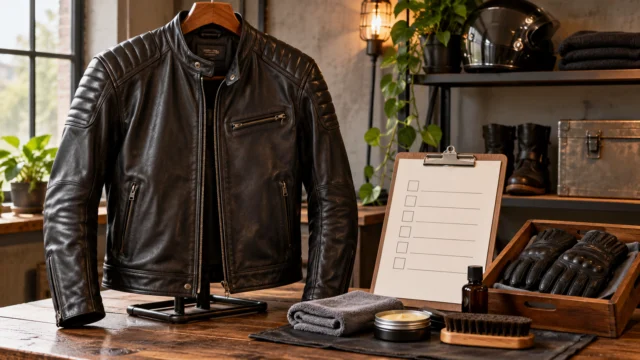
Road grime can make a leather jacket look neglected, but an aggressive cleaning shortcut may create a different problem. Protective riding clothing can combine several materials and finishes. Begin with the garment’s own instructions and a clear distinction between dirt and damage.
Inspect before cleaning
Look for visible abrasion, damaged seams or closures and record concerns. Cleaning can make a surface look better without establishing that it remains suitable protection. Seek manufacturer or specialist advice after significant damage or impact.
Identify the model and care labels. If the information is missing, ask before treating a large area. A product intended for furniture or footwear is not automatically appropriate for the jacket.
| Observation | First question | Avoid |
|---|---|---|
| Loose dirt | What gentle method does the maker allow? | Rubbing grit aggressively across the finish |
| Persistent mark | Is it dirt, staining or damage? | Escalating chemicals without advice |
| Mixed panel | Which material and label apply? | Treating every panel as leather |
| After cleaning | How should it dry? | Direct heat to meet a deadline |
Use the permitted method, not more product
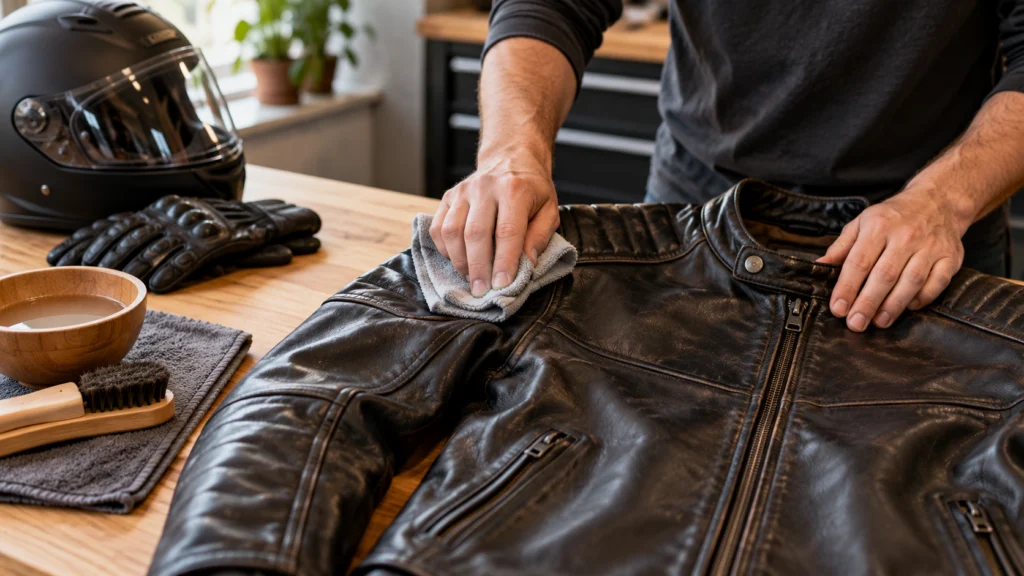
REV’IT!’s reviewed leather guidance describes a soft brush or barely damp microfibre cloth for excess dirt and warns against aggressive solvents and alcohol-based treatments. Your item’s label remains the controlling reference.
Use any cleaner or conditioner only as instructed for the actual finish. A discreet test may be required by the maker. Do not saturate the garment or assume repeated heavy treatment improves protection.
- Read labels for shell and removable components.
- Record damage separately from dirt.
- Use only a compatible approved method.
- Dry and store according to the manufacturer’s instructions.
Stop when the next step is uncertain
If an approved method does not remove a mark, ask the manufacturer or an appropriate specialist. A permanent mark may be preferable to an unapproved treatment that changes the material. Do not convert a cosmetic concern into a claim of technical repair.
Keep a short note of the product used and the date. That makes future advice more precise and helps avoid layering incompatible treatments over an unknown history.
Questions and answers
Can stronger solvent remove grime faster?
Do not use that assumption. Follow the garment’s care limits; aggressive products can be unsuitable.
Does conditioning restore worn seams?
No. Cosmetic care and structural or protective damage require different assessment.
Should all leather items use the same recipe?
No. Finish, construction and mixed materials can change the requirements. Use the exact item’s instructions.
Sources: support.revitsport.com.