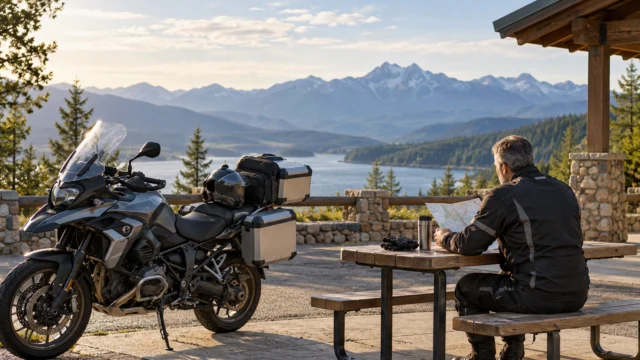
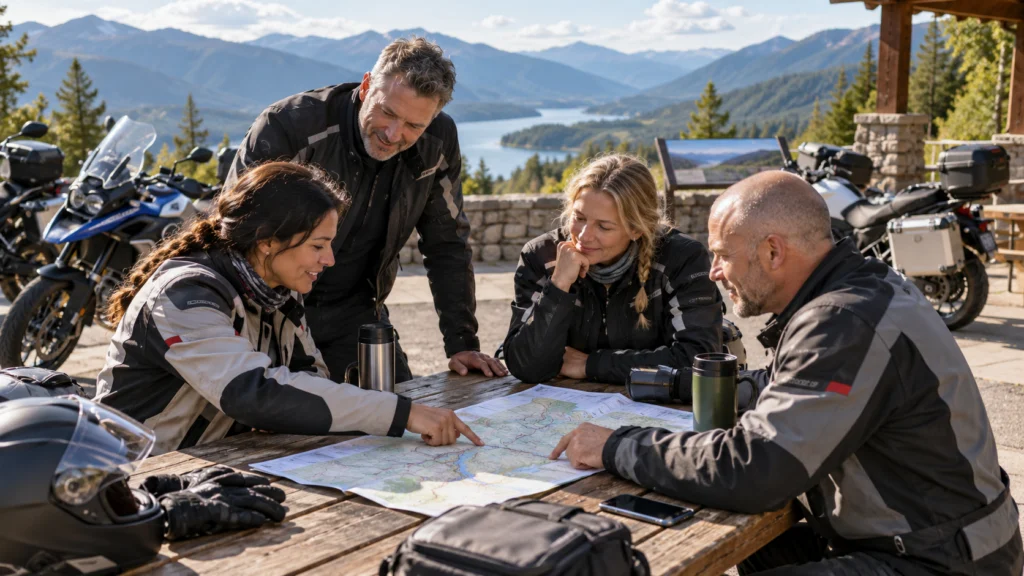
A group ride needs a shared plan without making every rider surrender their own judgement. Agree the destination, meeting points and how changes are communicated before leaving. No social commitment should require someone to ride beyond their ability or suitable conditions.
Make the plan understandable
Share a route and practical stops that people can review while stationary. Explain how a person can leave the group or take a shorter option. A plan that depends on everyone staying visually close at all times can create unnecessary pressure.
Check the experience and needs of the group without turning the discussion into a competition. Technical group-riding skills belong in appropriate rider training, not a brief social message.
| Topic | Agree | Boundary |
|---|---|---|
| Route | Destination and known meeting points | No need to rush to keep contact |
| Pace | A manageable plan for participants | Each rider follows conditions and law |
| Breaks | Suitable legal stopping places | Anyone can request a change |
| Separation | What to do if the group splits | No unsafe catching-up expectation |
Keep communication off the moving decision
Set arrangements before departure and make updates at suitable safe stops. Do not expect riders to read messages or operate phones while moving. A missed turn is not a reason for an abrupt manoeuvre or distracted correction.
Ontario’s handbook emphasises advance route planning, courteous behaviour and avoiding drowsy driving. Apply those general principles rather than treating the group’s timetable as more important than alertness.
- Share the route before the meeting.
- Agree practical regrouping and exit options.
- Keep phone use for safe stops.
- Respect a rider’s decision to shorten or leave the trip.
Review the social arrangement
Afterwards, ask whether the plan felt clear and manageable. A person who was uncomfortable should be able to say so without ridicule. Adjust the next route or group format instead of assuming everyone will adapt.
This article does not teach formations, spacing or riding techniques. Use qualified training and current official guidance for those skills. A good social plan supports responsible riding; it does not replace competence.
Questions and answers
Must I keep up with the group at any cost?
No. Ride within suitable conditions, your competence and applicable rules. The plan should allow separation without pressure.
Should route changes be texted while people ride?
Do not create an expectation of reading or replying while moving. Agree safe stopped communication.
Can this guide replace group-riding training?
No. It addresses planning and expectations, not technical riding instruction.
Sources: ontario.ca.