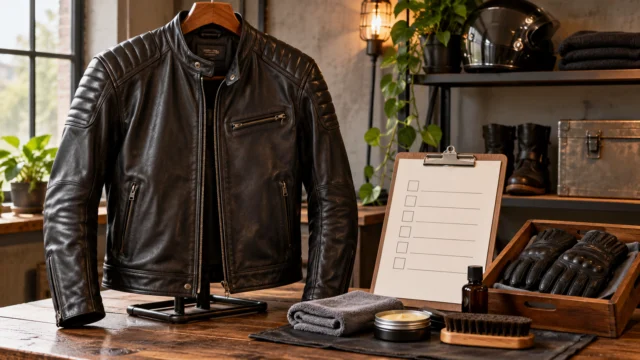
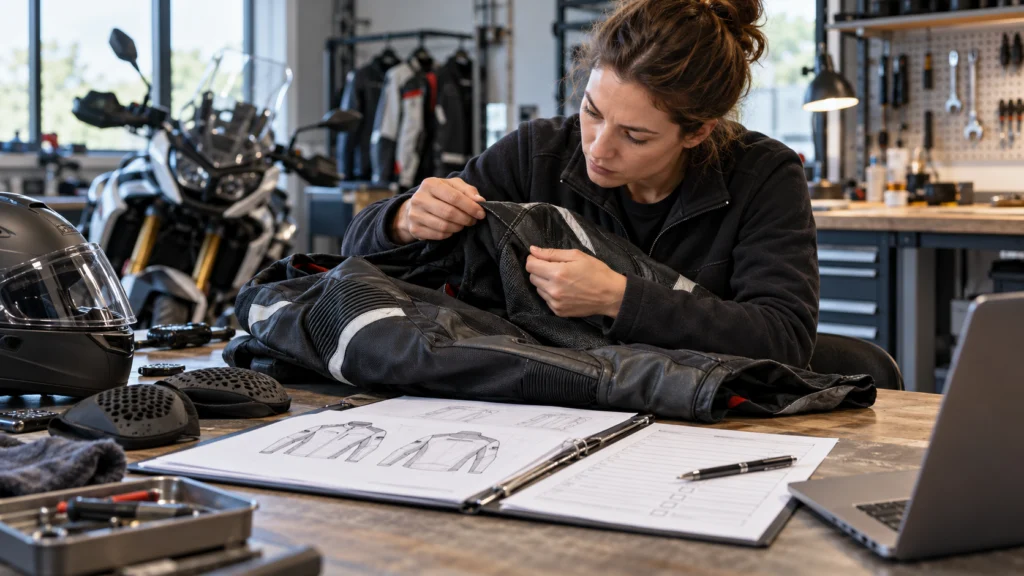
A worn zip, damaged seam or abraded panel can lead to different repair decisions. Riding gear should not be treated as ordinary fashion clothing when protective function may be involved. Start with the manufacturer or an appropriate specialist and a clear description of the concern.
Identify the item and its history
Provide the model, labels and any known impact or repair history. Photograph visible concerns from useful angles without hiding context. State what you do not know, especially for second-hand gear.
Ask whether the proposed repair is suitable for the product and what it can actually restore. A neat seam is not by itself evidence that the garment retains its documented protective properties.
| Topic | Ask | Useful record |
|---|---|---|
| Assessment | What is damaged and what remains uncertain? | A clear condition description |
| Scope | Which parts and methods are proposed? | Written repair details |
| Suitability | What can and cannot be claimed afterwards? | Limits explained plainly |
| Cost | What is the complete usable outcome? | Repair and replacement comparison |
Avoid an unapproved alteration
Do not change protective pockets, panels or connections merely to improve appearance or fit. Obtain appropriate product-specific advice. A general clothing repair service may not have the relevant knowledge or authorisation.
Cleaning and conditioning are separate from repair. Manufacturer care instructions help maintain suitable materials but should not be used to claim that damage has disappeared technically.
- Keep model and history information available.
- Ask about protective function, not only appearance.
- Request the repair scope and limitations in writing.
- Do not use the item until suitability concerns are resolved appropriately.
Compare future use rather than past spending
A costly original purchase can make repair emotionally attractive, but it does not decide the next step. Consider the proposed result, remaining uncertainty, fit and complete cost. Do not keep paying for an item that no longer meets the need.
Retain the specialist’s advice with the maintenance record. If replacement is chosen, do not pass the damaged item on as suitable protective equipment without accurately disclosing its condition and following appropriate guidance.
Questions and answers
Can any tailor repair protective riding clothing?
Do not assume so. Seek appropriate manufacturer or specialist advice for the product and damage.
Does a repaired appearance prove restored protection?
No. Ask what the repair can legitimately establish and what limitations remain.
Should original price decide the repair?
No. Compare future suitability, cost and uncertainty rather than trying to recover past spending.
Sources: support.revitsport.com; support.revitsport.com.